

Diptera.info :: Identification queries :: Diptera (adults)
 Phaonia sp. (18.05.2025) --> Phaonia cf. fuscata, female
|
|
| fatsemann |
Posted on 17-11-2025 22:11
|
|
Member Location: Posts: 292 Joined: 09.10.17 |
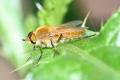
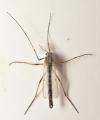
Hello, is it possible to get an ID for this Phaonia? Sighted on 18.05.2025 in Germany, North Rhine-Westphalia in the garden. Body-size approximately 6 to 7 mm Thank you. Bernd fatsemann attached the following image: 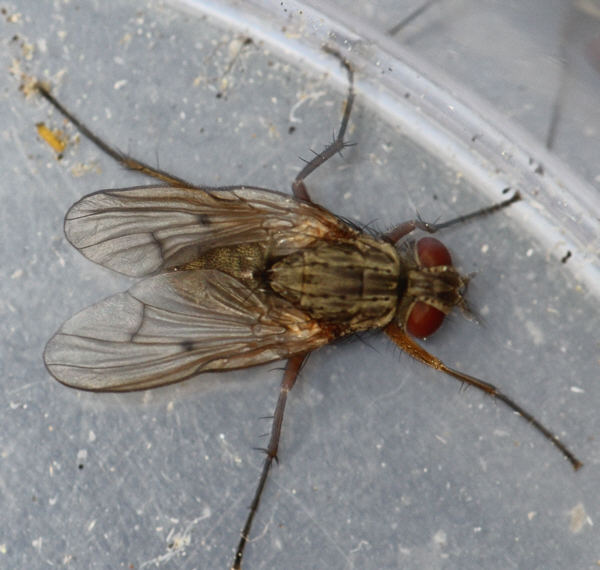 [62.49Kb] Edited by fatsemann on 18-11-2025 22:45 |
|
|
|
| fatsemann |
Posted on 17-11-2025 22:12
|
|
Member Location: Posts: 292 Joined: 09.10.17 |
#2
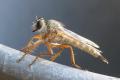
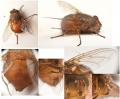
fatsemann attached the following image: 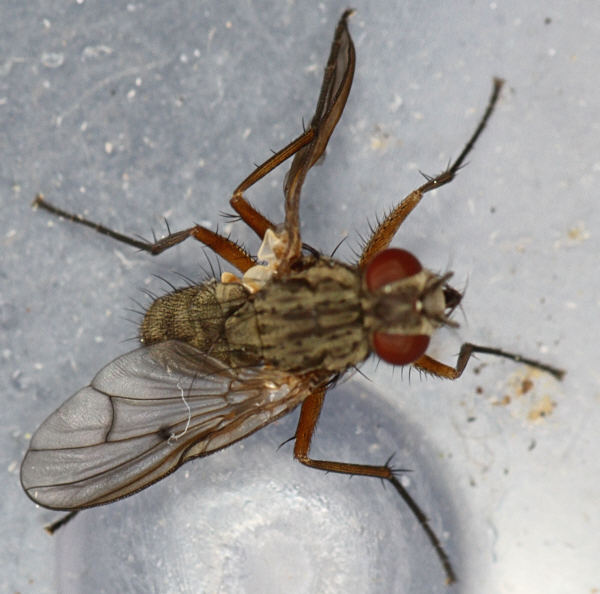 [54.63Kb] |
|
|
|
| fatsemann |
Posted on 17-11-2025 22:12
|
|
Member Location: Posts: 292 Joined: 09.10.17 |
#3
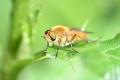
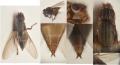
fatsemann attached the following image: 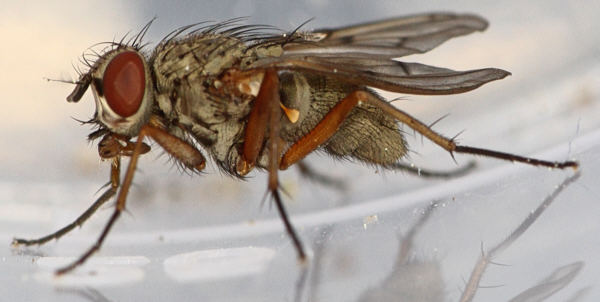 [39.16Kb] |
|
|
|
| fatsemann |
Posted on 17-11-2025 22:13
|
|
Member Location: Posts: 292 Joined: 09.10.17 |
#4
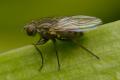
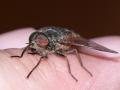
fatsemann attached the following image: 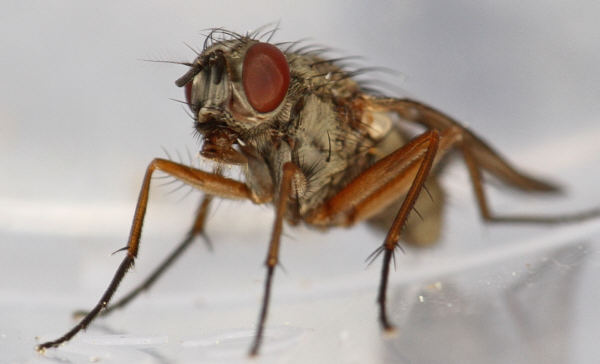 [35.45Kb] |
|
|
|
| eklans |
Posted on 18-11-2025 13:00
|
|
Member Location: Franconia, Germany Posts: 4745 Joined: 11.11.18 |
The images are quite blurry - hard to make an ID or even a serious guess unfortunately. But anyhow I guess it could be the female Phaonia fuscata which I've never seen before. - legs predominantly yellow - crossveins significantly infuscated (but not a P. tuguriorum!) - antennal base black - arista long plumose? - parafacial with a transverse black spot near the insertion of the antenna at #3??? Greetings, Eric |
|
|
|
| fatsemann |
Posted on 18-11-2025 22:43
|
|
Member Location: Posts: 292 Joined: 09.10.17 |
Hi Eric, thanks for your effort and your assessment. The arista has long plumose. Sorry, I don't understand the last question. I don't know what you mean. On observation.org, depending on the pictures, you get anywhere from 100% Phaonia fuscata to 100% Phaonia tuguriorum. I'll classify the fly as Phaonia cf. fuscata. Greetings Bernd fatsemann attached the following image: 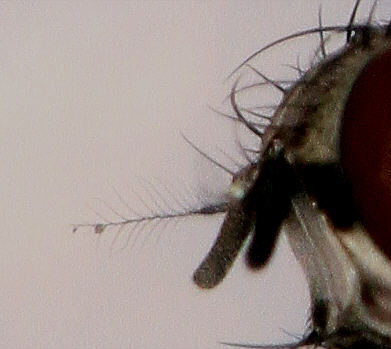 [29.49Kb] |
|
|
|
| jck |
Posted on 18-11-2025 23:52
|
|
Member Location: Posts: 1185 Joined: 21.08.12 |
P. tuguriorum and P. fuscata have 2 main differences when seen from above: P. fuscata has 3 DCs whereas P. tuguriorum has 4 Dcs / P. tuguriorum has a pale brown tip to the scutellum whereas P. fuscata has a fairly uniformly coloured scutellum. Observation.org can be good for some species but I would be very careful with many of their ID suggestions. Even if it says 100%, treat that as a starting point for further detailed research of your own. James |
|
|
|
| fatsemann |
Posted on 20-11-2025 22:00
|
|
Member Location: Posts: 292 Joined: 09.10.17 |
Hi James, thanks for your explanation. I'm not an expert. What are DCs and where can I find them? Greetings Bernd |
|
|
|
| eklans |
Posted on 21-11-2025 11:01
|
|
Member Location: Franconia, Germany Posts: 4745 Joined: 11.11.18 |
Hi Bernd, DC = dorsocentral setae You may find all terms in this very useful glossary: https://diptera.i.../terms.php Greetings, Eric |
|
|
|
| fatsemann |
Posted on 21-11-2025 15:14
|
|
Member Location: Posts: 292 Joined: 09.10.17 |
Hi Eric, thank yo for the information. It will help me a lot. greetings Bernd |
|
|
|
| Jump to Forum: |