

Diptera.info :: Identification queries :: Diptera (adults)
 Dolichopodidae ID
|
|
| Woodmen |
Posted on 22-02-2026 18:25
|
|
Member Location: Kirov region, Russia Posts: 2047 Joined: 17.01.13 |
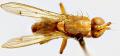
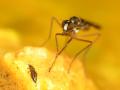
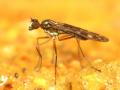
Russia, Kirov region, 31.07.2025. https://www.inatu.../339756730 Vladimir. Woodmen attached the following image: 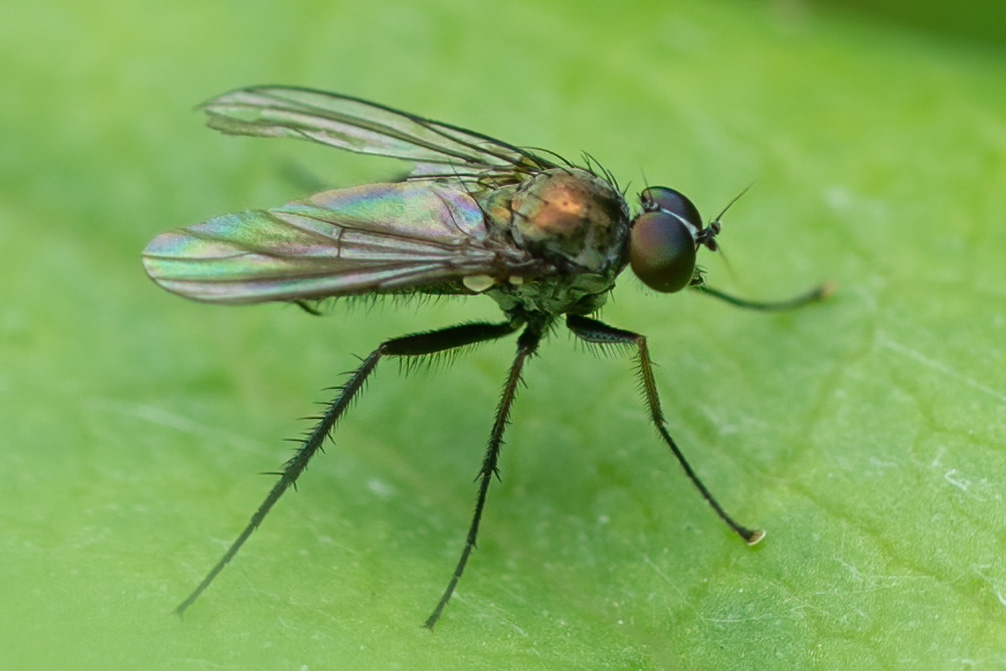 [181.14Kb] |
 |
|
| John Carr |
Posted on 23-02-2026 01:06
|
 Super Administrator Location: Colorado, USA Posts: 10642 Joined: 22.10.10 |
Diaphorinae. Probably Diaphorus. |
|
|
|
| Igor Grichanov |
Posted on 24-02-2026 11:50
|
 Member Location: St.Petersburg, Russia Posts: 1810 Joined: 17.08.06 |
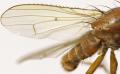
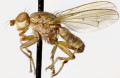
Keys to Diaphorus deliquescens (after 2006 N Europe key).
Igor Grichanov |
|
|
|
| John Carr |
Posted on 24-02-2026 13:30
|
|
Super Administrator Location: Colorado, USA Posts: 10642 Joined: 22.10.10 |
I was curious about the unusual species name. Loew (1871) wrote first in Latin segmentum ultimum venae longitudinalis qartae adversus alae marginem deliquescens and then in GermanFlügel grau glasartig, verhältnissmässig von etwas geriugerer Grösse als bei Diaphorus Winthemi; das Flügelgeäder ist ein ganz ahnliches, doch hat die hintere Querader eine senkrechtere Lage und der letzte Abschnitt der fünften Längsader verdünnt sich nicht nur allmälig immer mehr, so dass er gegen den Flügelrand hin sehr fein und ziemlich undeutlich wird, sondern er neigt sich auch gegen sein Ende hin der Flügelspitze etwas zu, so dass der Abstand seiner Mündung von der Mündung der vierten Längsader erheblich kleiner und die dritte Hinterrandszelle gegen ihr Ende hin bei weitem nicht in dem Grade verbreitert ist, wie dies bei Diaphorus Winthemi der Fall ist. |
|
|
|
| Woodmen |
Posted on 24-02-2026 17:30
|
|
Member Location: Kirov region, Russia Posts: 2047 Joined: 17.01.13 |
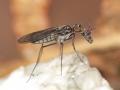
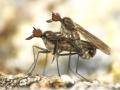
A female of the same species (I think) in the same place and at the same time: https://www.inaturalist.org/observations/339590850 |
|
|
|
| Igor Grichanov |
Posted on 25-02-2026 14:41
|
|
Member Location: St.Petersburg, Russia Posts: 1810 Joined: 17.08.06 |
Diaphorus deliquescens Loew, 1871: Beschr. eur. Dipt. 2: 293 deliquéscens [Lat.: 'disappearing'] belongs to the fifth longitudinal vein (M4). “Wings grey glass-like, relatively of a slightly larger size than Diaphorus Winthemi; the wing gears are quite similar, but the rear transverse vein has a more vertical position and the last section of the fifth longitudinal vein not only gradually thins more and more, so that it becomes very fine and rather indistinct towards the wing edge, but it also bends towards its end towards the tip of the wing somewhat, so that the distance of its mouth from the mouth of the fourth longitudinal vein is considerably smaller and the third rear edge cell towards its end is by far not widened in the same degree as is the case with Diaphorus Winthemi”. Negrobov studied the holotype in the collection of Institut für systematische Zoologie, Museum für Naturkunde, Humboldt Universität zu Berlin. He redescribed it (not describing M4), figured the male genitalia, and remained it in Diaphorus. Igor Grichanov |
|
|
|
| Jump to Forum: |