

Diptera.info :: Identification queries :: Other insects, spiders, etc.
 Nitidulidae > Epuraea cf. luteola. OK. S. Spain
|
|
| Maherjos |
Posted on 29-10-2018 11:27
|
 Member Location: Motril (Granada) España Posts: 2401 Joined: 02.09.09 |
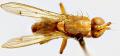
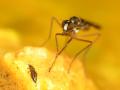
Small beetles about 2-3 mm long apparent, inside a pomegranate, already open in the tree, eating and scampering through its already decaying pulp. Transparent color, or similar to the interior of the decomposed pulp. The wetlands of the Suárez Pond, in Motril, Granada, Spain. Immediate area of the Mediterranean coast. Thanks for your help in advance Maherjos attached the following image: 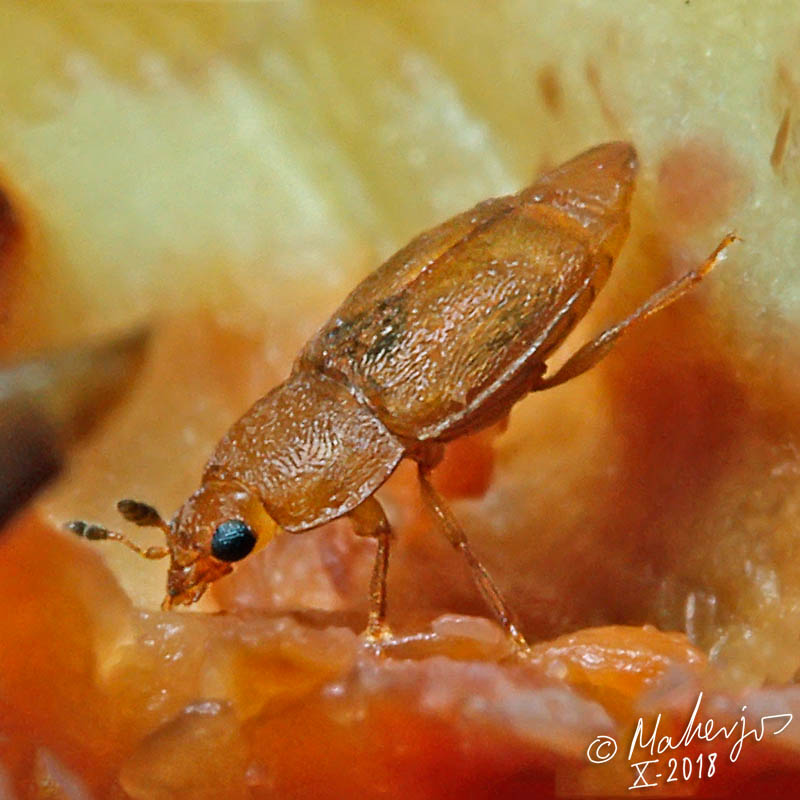 [109Kb] Edited by Maherjos on 30-10-2018 20:05 |
|
|
|
| Maherjos |
Posted on 29-10-2018 11:27
|
|
Member Location: Motril (Granada) España Posts: 2401 Joined: 02.09.09 |
.
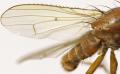
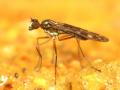
Maherjos attached the following image: 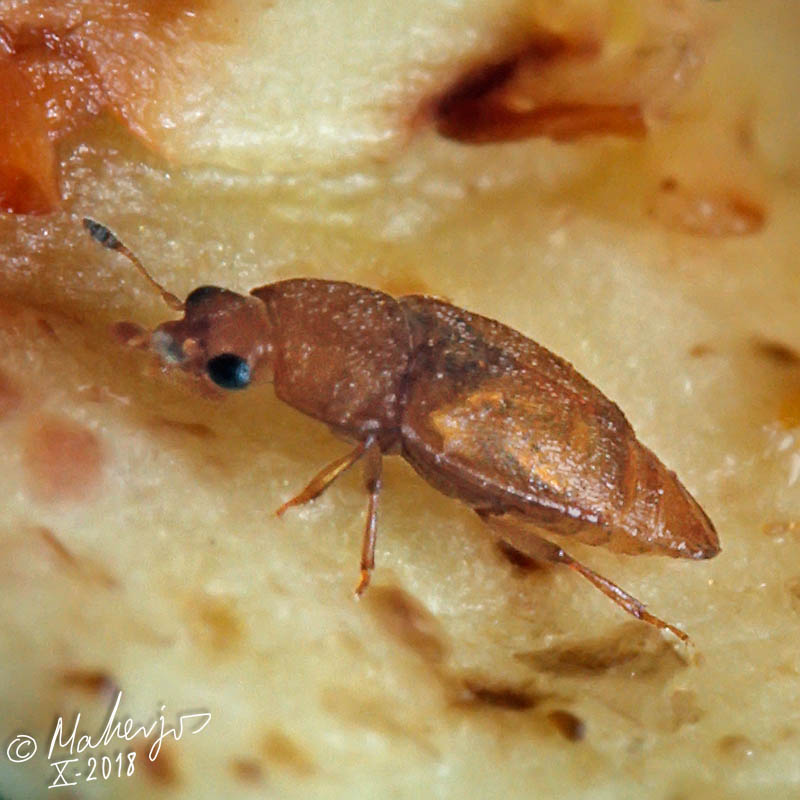 [107.86Kb] |
|
|
|
| Maherjos |
Posted on 29-10-2018 11:28
|
|
Member Location: Motril (Granada) España Posts: 2401 Joined: 02.09.09 |
.
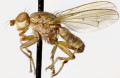
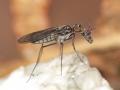
Maherjos attached the following image: 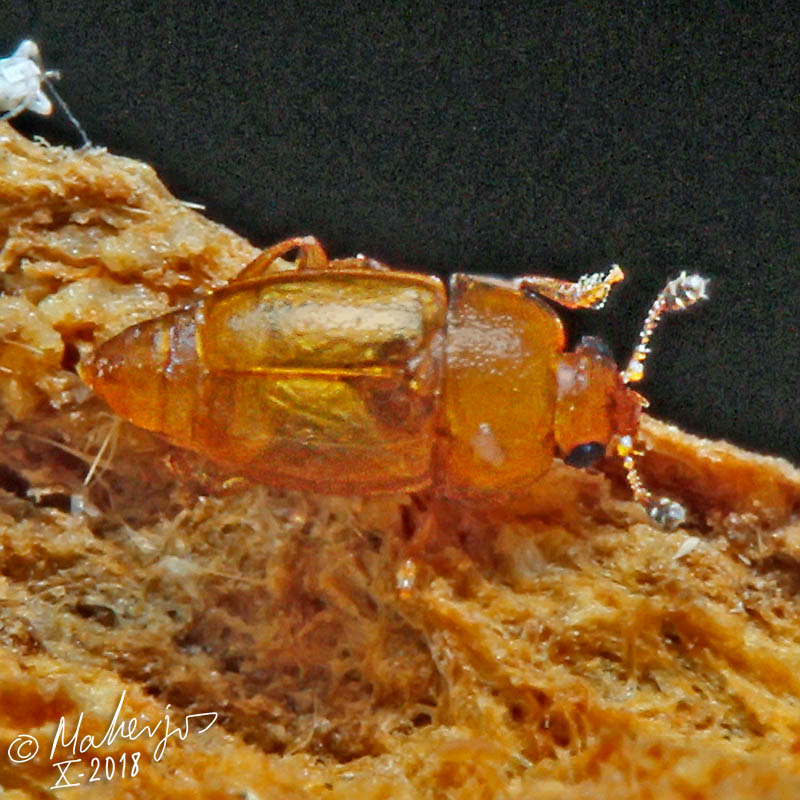 [156.69Kb] |
|
|
|
| Maherjos |
Posted on 29-10-2018 11:28
|
|
Member Location: Motril (Granada) España Posts: 2401 Joined: 02.09.09 |
.
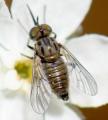
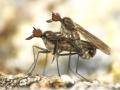
Maherjos attached the following image: 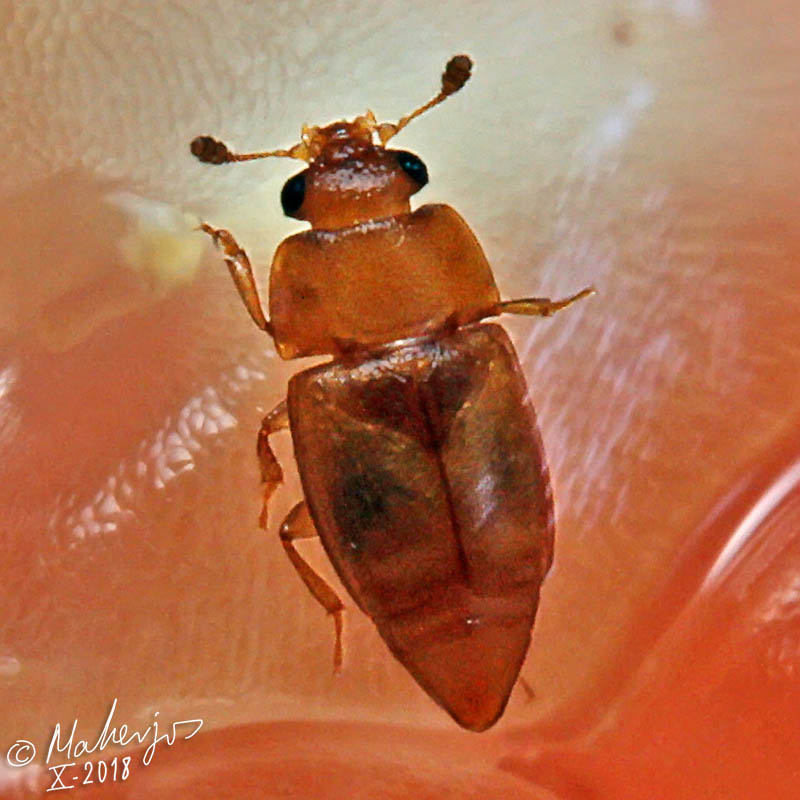 [111.28Kb] |
|
|
|
| Dmitry Gavryushin |
Posted on 29-10-2018 13:21
|
 Member Location: Moscow region, Russia Posts: 3346 Joined: 17.10.05 |
Nitidulidae, Epuraea or close |
|
|
|
| Maherjos |
Posted on 29-10-2018 20:19
|
|
Member Location: Motril (Granada) España Posts: 2401 Joined: 02.09.09 |
Dmitry Gavryushin wrote: Nitidulidae, Epuraea or close Very grateful for your help  I searched the Web and found similarities with Epuraea luteola https://bugguide....iew/121498 Edited by Maherjos on 29-10-2018 20:30 |
|
|
|
| Sundew |
Posted on 30-10-2018 19:43
|
 Member Location: Berlin and Baden-Württemberg, Germany Posts: 3939 Joined: 28.07.07 |
The shape of the temples leads us to subgenus Haptoncus that consists of 3 species, E. luteola included. Now we need to know if there is a tiny tooth at the lower margin of the eye ("Abb. 1" in http://coleonet.d...toncus.htm). "No tooth" would lead to the Australian E. imperialis that is introduced in Spain. However, the the tips of its elytra are clearly rounded, which is not the case in your animals. That leaves us with E. ocularis and E. luteola. To tell them apart is difficult. E. ocularis specimens might be darker, but not necessarily. In E. luteola the tips of the front tibiae are said to show a sharp angle on the outside; visible in "Abb. 12". In E. ocularis the tips are rounded or show an obtuse angle at least. I see only one front tibia in the last picture, and its tip is not quite clearly recognizable... So: Epuraea cf. luteola. Perhaps you can check again. Regards, Sundew Edited by Sundew on 30-10-2018 19:44 |
|
|
|
| Maherjos |
Posted on 30-10-2018 20:12
|
|
Member Location: Motril (Granada) España Posts: 2401 Joined: 02.09.09 |
Sundew wrote: The shape of the temples leads us to subgenus Haptoncus that consists of 3 species, E. luteola included. Now we need to know if there is a tiny tooth at the lower margin of the eye ("Abb. 1" in http://coleonet.d...toncus.htm). "No tooth" would lead to the Australian E. imperialis that is introduced in Spain. However, the the tips of its elytra are clearly rounded, which is not the case in your animals. That leaves us with E. ocularis and E. luteola. To tell them apart is difficult. E. ocularis specimens might be darker, but not necessarily. In E. luteola the tips of the front tibiae are said to show a sharp angle on the outside; visible in "Abb. 12". In E. ocularis the tips are rounded or show an obtuse angle at least. I see only one front tibia in the last picture, and its tip is not quite clearly recognizable... So: Epuraea cf. luteola. Perhaps you can check again. Regards, Sundew I am very grateful for your extensive, detailed and complete explanation. If when I return to the wetland where I found these bugs are still there, I will try to get complete information that allows to specify, if possible, your identity. Very warm greetings from the south of Spain.  José Marín |
|
|
|
| Jump to Forum: |